
The body politic: how brands engineer the “normal” body | A conversation with Luca Marchetti
In a world where brands and social norms dictate what is considered “normal,” can we ever achieve bodily autonomy? While legal frameworks set the rules, the images we consume daily often exert a far more powerful control over our desires and self-perception.
In this interview, we speak with Luca Marchetti, a scholar, and senior lecturer at the Sorbonne Nouvelle about the friction between fashion, identity, and power.
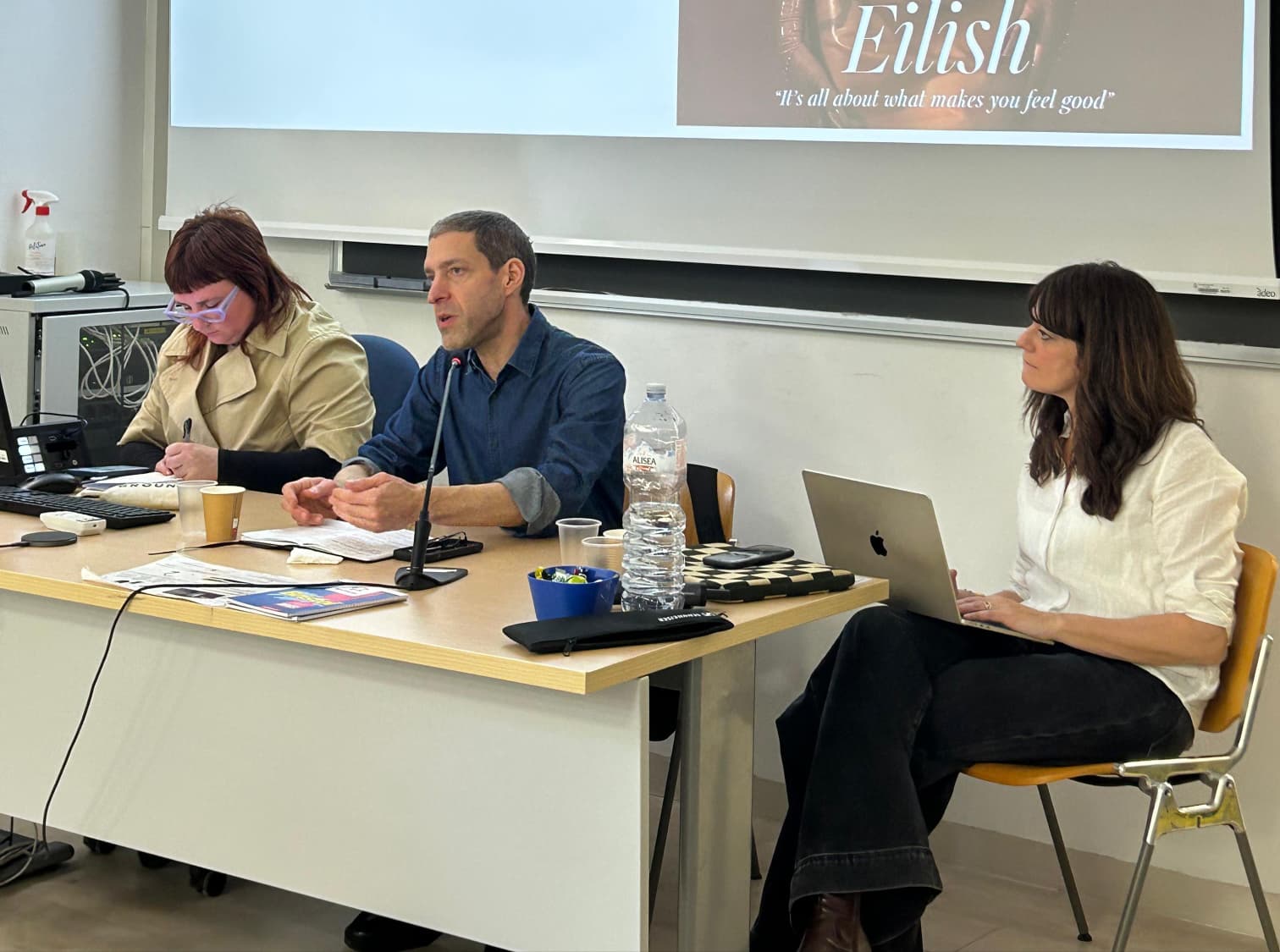
He was also a speaker for the third We-frame laboratory, ‘equality and body.’
I want to ask how current social and legal frameworks define what is considered a “normal” body.
That is difficult for me to answer because my competencies are limited to the realm of pop culture and brand imaginaries. The legal and social aspects are less directly connected with the world of brands, though the social aspect perhaps more so than the legal one.
The social aspect of what is legitimate, acceptable, and desirable regarding ‘bodiness’ and corporalities, which essentially means body morphologies and aesthetics, is heavily shaped by the images projected by brands.
They represent desirable ideals simply because their core business is based on our aspiration to appear as the best version of ourselves. That ‘best version’ is itself shaped by what we think others will find desirable or interesting in us. Brands leverage these aspects of communication and the social collective imaginary very heavily: to be as desirable as the product itself.
In what ways do social norms limit an individual’s sense of bodily autonomy?
Social norms? That reminds me of a take from Judith Butler, a contemporary philosopher specialised in gender and identity issues. She notes that our brains need simplification; they systematically seek stereotypes to compress the information they receive and build a more manageable view of the world.
Social norms are heavily influenced by this human tendency to simplify. From a social point of view, playing on stereotypes is a way to simplify a reality that is too complex. It is easier to manage a population by dealing with stereotypes instead of real people and real reality.
The more critical aspect is that promoting a stereotype allows you to control the population. You can succeed in directing desires, aspirations, and behaviours towards easily identifiable profiles that align with your ideology, whether ‘you’ refers to a state, a form of power, or an institution.
How can we relate all this to equality? How can we define equality based on bodily autonomy?
Let me quote the Italian philosopher Emanuele Coccia. He points out that the only thing we can really do is to make differences visible. Equality is a very utopian category. It is a concept we can use to try to grasp the best social form possible, but we will never be able to produce absolute equality.
We can only become increasingly aware of differences and try to make living among these differences as fluid as possible. Equality remains abstract. It is like an artist aspiring to perfection: you will never reach it, but in getting closer, you become more aware of your abilities and what you want.
Also while there is sexualisation in the fashion imaginary regarding the male body, the real issue with masculine imagery is domination. The male body is represented as a dominant one, even outside of sex, featuring large shoulders, square shapes, and top-down points of view. This communicates that the primary value connected to masculinity is the power to dominate and control. That is why they “own” their body; they control the context, starting from themselves.
Do you think that to reach that ‘perfection’ of equality we should work on the grassroots level or try to change the rules?
Framing it as one or the other adopts a very Western point of view. You can imagine an institution imposing a form of equality, or you can work at the ground level for phenomena to rise from the bottom to the institution. However, without a dialogical dynamic, I do not think anything is possible.
This is why I focus on pop culture. It is part of the “unofficial” side of culture, but because it is unofficial, it has the power to address official questions, such as owning one’s body, exploiting one’s body, or whether femininity can be autonomous and powerful without merchandising the body. Doing this in a song or a video clip stimulates sensibility. It is the first form of dialogue that can point to official aspects of living.
I do not believe equality can come uniquely from the institution or uniquely from the bottom. I am also interested in the unpredictable, like the loss of power for Orbán this week, which was totally unexpected. But if I had to put this into a programme, I would target dialogical forms of transformation.
I am not a believer in a conflict logic of evolution, where one part of the population takes power because they were oppressed. That often only lasts for a few decades before another group wants the power back. It does not change people’s awareness or conscience; it is just a matter of who is the strongest. That is not sustainable politics in the long term.