Second Laboratory | Who Holds Power: Gender, Authority, and Inequality
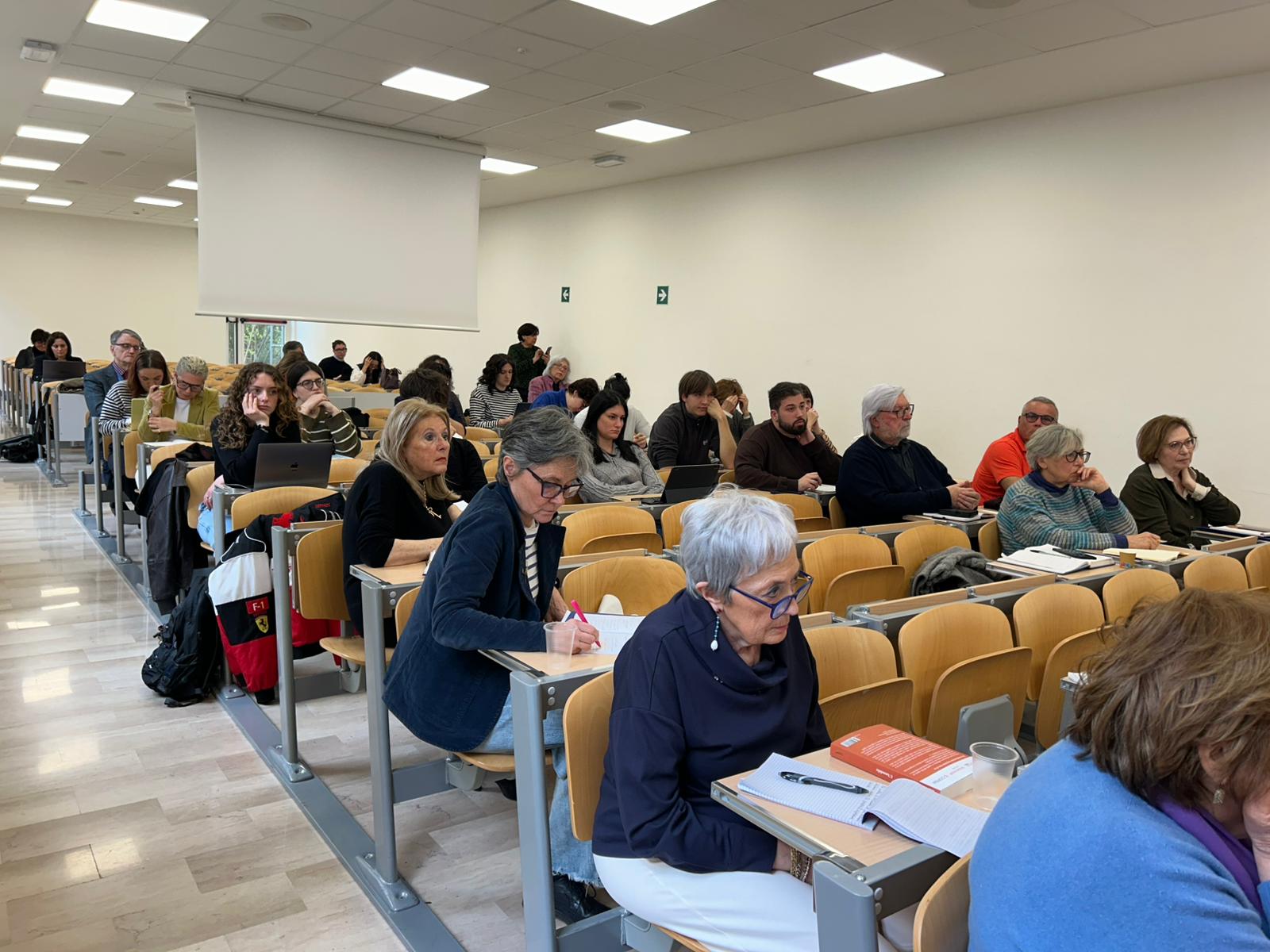
The second session of the WE Frame project laboratory, titled “Equality and Power,” took place on April 1st at the Department of Law of the University of Ferrara. This session aimed to demonstrate how legal and institutional frameworks can perpetuate power imbalances or contribute to transforming them when approached critically. The broader aim of the laboratory series is to connect theoretical knowledge with lived realities and translate them into operational models. The programme of workshops was organised as part of the WE Frame project by the partners CDS, the Department of Law at the University of Ferrara, Traces&Dreams and Officine Europa.
The morning session brought together Letizia Palumbo and Sara Boicelli to discuss how gender equality and power structures operate in practice.
Letizia Palumbo, researcher at Ca’ Foscari University of Venice, works at the intersection of theory and field experience in areas such as human rights, migration, and domestic and economic violence. Adopting a perspective from the “margins”, she examines less visible dimensions of power and inequality, aligning theoretical frameworks with lived social realities.
Sara Boicelli, PhD student at the University of Palermo,, specialises in law studies with an intersectional approach. She has been actively involved in setting up and managing support centres for survivors of gender-based violence, translating theoretical knowledge into practical social services.
Data reveals that 60% of Europeans face power inequality
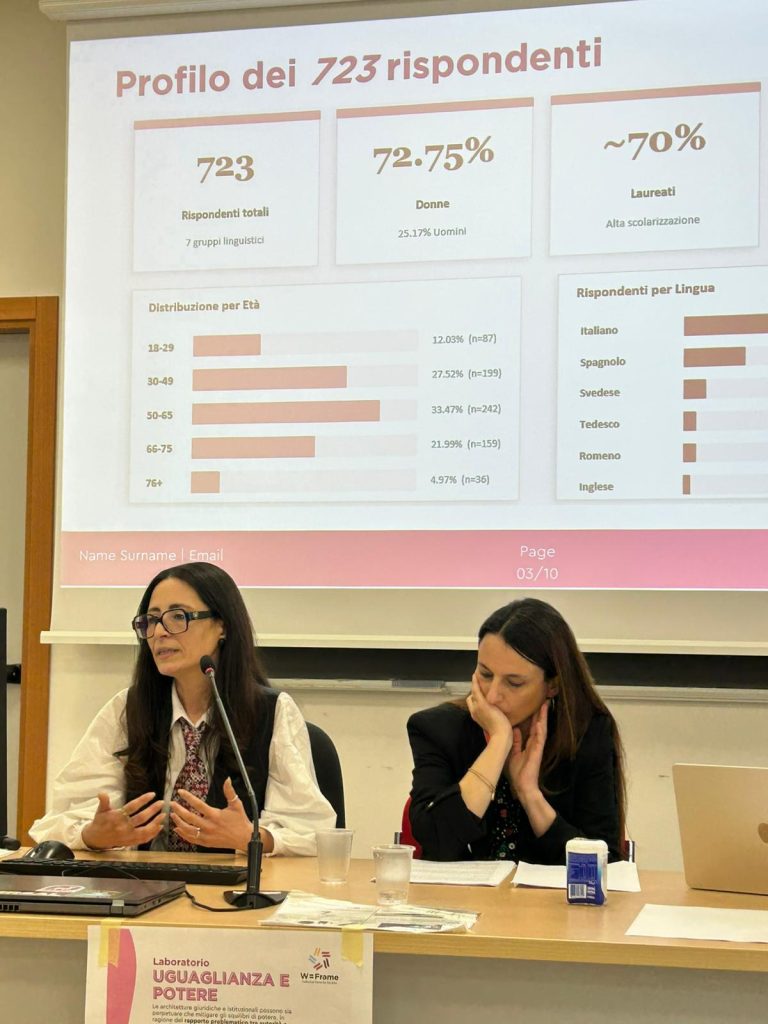
Silvia Pellino presented the results of a questionnaire completed by 723 people from various European countries. The findings showed that over 87% of participants were familiar with the concept of the “glass ceiling,” and around 60% had experienced inequality in the distribution of power. The report highlighted the structural impact of gender on power dynamics in both public and private institutions, and emphasised the need to address violence and reform European Union policies in order to achieve substantive equality.
Afterward, Letizia Palumbo presented a conceptual mapping of power through a gendered and intersectional lens. She characterised the “margin” not as a site of weakness but as a strategic position from which to observe and deconstruct power relations. From this perspective, the objective is not to reproduce existing structures in pursuit of individual success but to challenge them at their roots. Palumbo also noted that, as Althusser mentions, feminist theory has historically functioned as “praxis,” connecting theory to action and disrupting the traditional binary between masculine rationality and feminine emotion.
She identified three key dimensions of power through which various feminist theories have analysed and challenged social structures. The first dimension views power as a resource to be redistributed; this perspective is often associated with “liberal feminism”, which aims to achieve a fairer share of power within existing systems. The second dimension defines power as domination (power over), focusing on unmasking and deconstructing relations of authority that are built on a specific “masculine subjectivity” and reproduced through legal and social tools. Finally, she described power as “power to” and “power with,” focusing on the collective capacity to achieve goals and the strength found in shared action.
Letizia Palumbo explained that real change comes from grassroots feminist movements that use an intersectional approach to examine the overlap of gender, race, class, age and other themes. From this perspective, central issues such as the right to control one’s own body and the value of housework (often referred to as social reproduction or care work) are embedded in the way society functions. Then, she moved the conversation away from viewing gender-based violence as an isolated issue, and instead viewed it as a structural phenomenon rooted in deep-seated social inequalities.
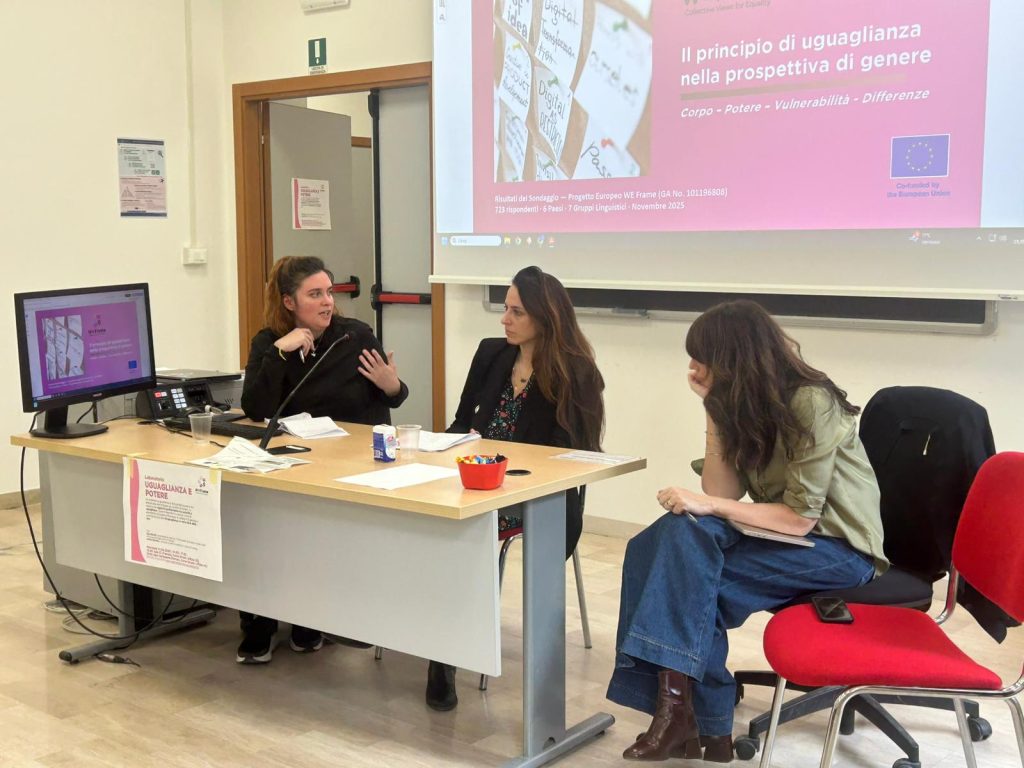
During the session, attendees shared ideas regarding the need to reconsider how power operates within society and politics. Examining the experiences of women in leadership roles reveals that simply being present in these positions is not enough. Using power through traditional, male-dominated methods can perpetuate unfair systems, such as the glass ceiling. Instead, power should be described by terms such as freedom, responsibility, and capability. In this way, power is not about controlling others, but about the ability to create change.
Social Reproduction Theory and the importance of care work were also another major focus of the session. Participants critically examined capitalist systems, arguing that the systematic undervaluation of care and domestic labour significantly contributes to inequality and exploitation. They also emphasised the importance of an intersectional approach, whereby gender, migration status, and economic position create different types of vulnerability that require specific legal and structural solutions.
Finally, the focus shifted towards practical strategies and ways to organise from the ground up. Participants examined examples of solidarity within struggling communities to demonstrate the importance of collective ties and trust in challenging rigid power structures. They also discussed the idea that contemporary politics must be grounded in lived experiences and developed from the ground up. This approach is necessary in order to address social inequalities, as well as broader environmental and intergenerational concerns, at a time when economic and technological power is growing.
Afternoon workshop: linking power and gender through intergenerational dialogue
Regarding the workshop, Silvia Pellino said: “This second session had a different focus to the first, with the discussion centering around ‘power’. The aim was to explore the connection between gender differences, equality and power.”
The workshop was structured around four discussion tables, each addressing a different dimension of the topic. At the “Intersectionality” table, participants discussed how factors such as skin colour, gender, level of education, and income can either facilitate or hinder access to power. In this context, power was understood broadly to include rights such as voting and institutional participation.
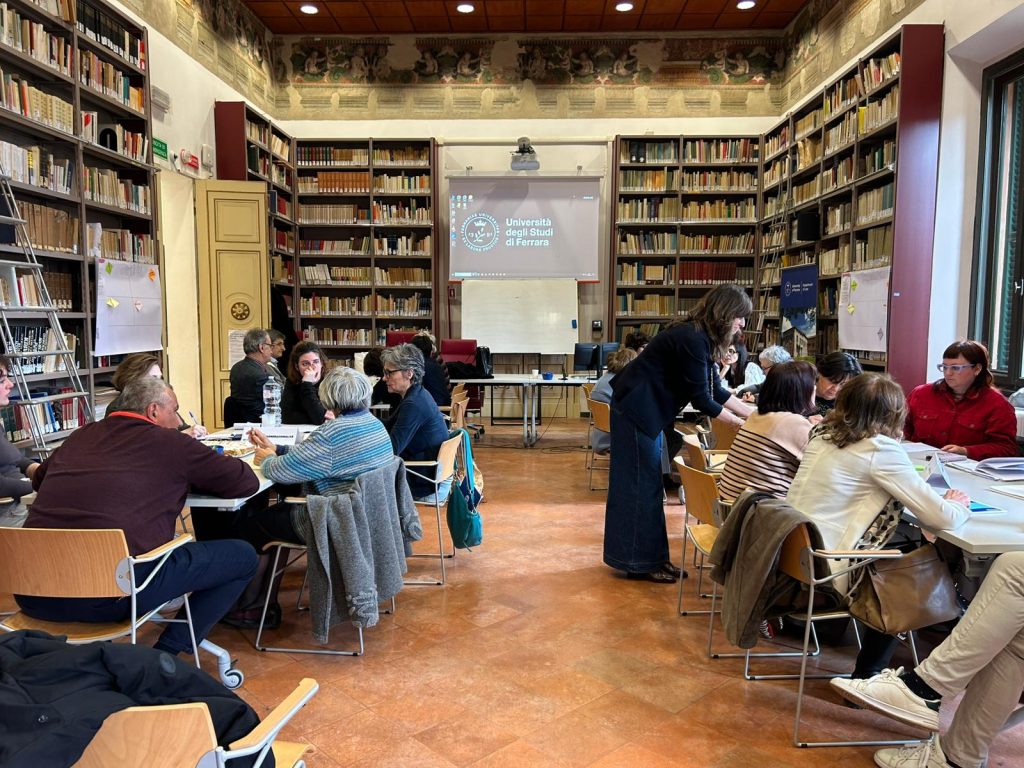
Similar discussions took place at the “Rights,” “Communication,” and “Intergenerational” tables. Particular attention was given to intergenerational dialogue. The presence of long-standing local stakeholders and younger university students created an opportunity for meaningful intergenerational exchange.
There was a strong desire, especially among the younger participants, to engage with the older generations. Silvia described this dynamic as one of the most valuable aspects of the workshop. For the organisers, who approached the project through an intergenerational lens, this interaction represented a core value of the initiative.
The first session of the workshop series, “Equality and Difference,” took place on 9 March 2026 and examined the assumption that inequality is “natural” and inevitable by introducing the concept of intersectionality. The next session, “Equality and Body,” is scheduled for 15 April.