
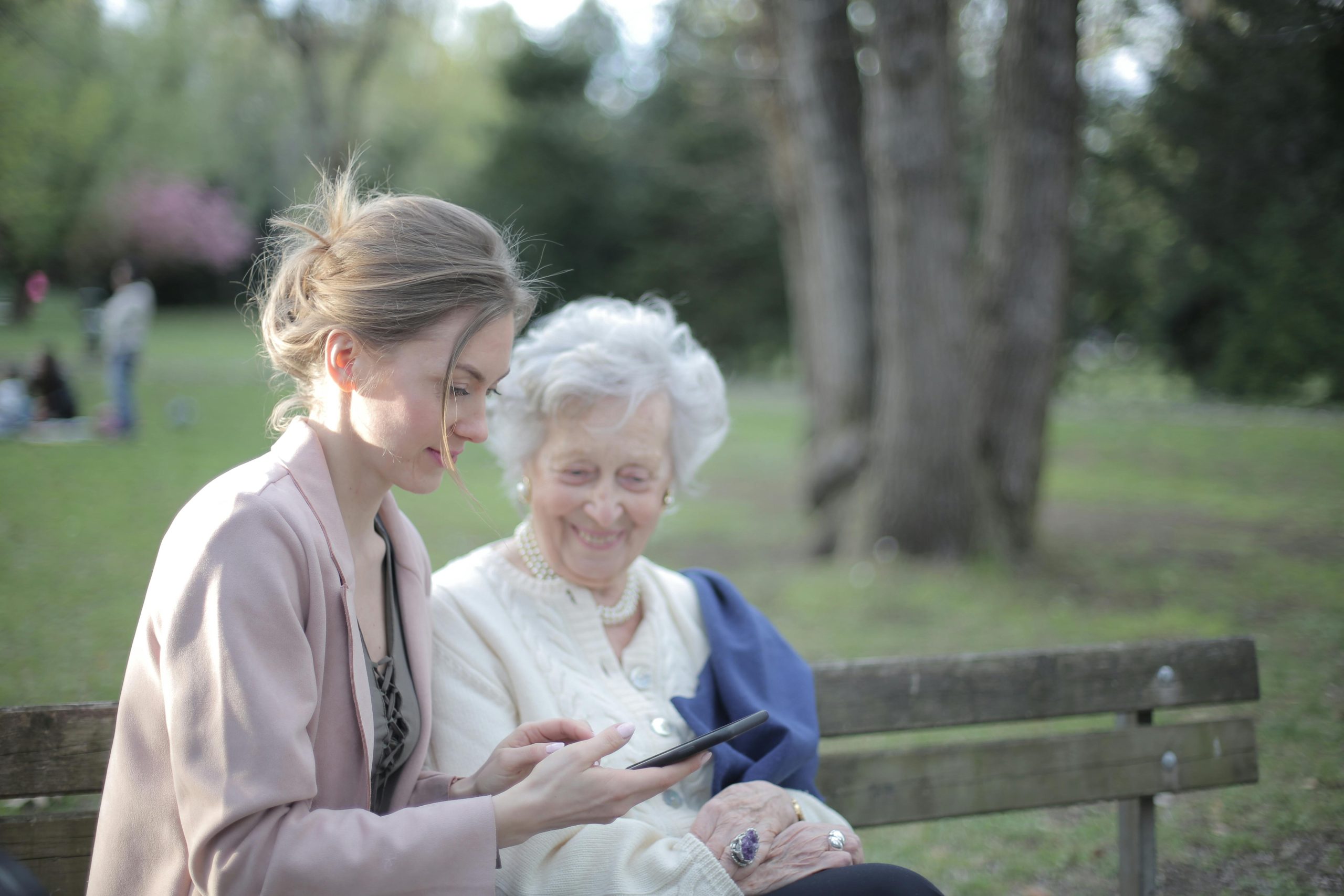
The Short Blanket. Sustainability of gender longevity
This is a translation of a text by Annalisa Ferrari (CDS Committee) presented at the conference ‘FEMGEVITY: Women’s difficult journey towards the right to “healthy” longevity: Science, prejudice, discrimination’, organised by AIDM – Italian Association of Women Doctors – on 8 March 2025.
“It’s no country for old women,” says Loredana Lipperini, writer, journalist, and professor of fiction and communication, in one of her latest pamphlets.
Agreed, but when it comes to longevity, Italy is indeed a country ‘of’ old women, in the sense that quantitatively we are the largest and longest-lived part of the population. Unfortunately, however, we are not a country ‘for’ old women, given that policies supporting older women, but also younger women, are still very much lacking!
The fact that this critical issue has received attention and been the subject of studies and given a name: ‘ageism’ (giving it a name means making it exist), should be understood precisely in the sense that the numerical quantity of elderly people is recognised, and because greater sensitivity towards discrimination and social inequalities has now been acquired.
I will therefore use numbers, numbers relating to social and gender discrimination, numbers relating to the cost of health in economic terms and in terms of social progress, and numbers relating to demographic imbalance, in an attempt to interpret and understand, from a sociological point of view, the consequences of all this, the developments that are changing the present, with new social structures, new roles, new needs, and constant manipulation, in which the economic aspect is prevalent, decisive, and discriminatory. A present that these numbers are constantly changing.
SOURCES
First of all, I would like to specify the sources from which I have drawn the data that I will cite in support of this presentation: ‘The Equitable and Sustainable Well-being of Provinces and Metropolitan Cities’, the result of a memorandum of understanding signed between Istat, Upi, Anci and the Regions and Autonomous Provinces, published on 11 February 2025. The very recent Gender Report, presented on 24 February 2025 in Rome by the INPS Steering and Supervisory Board, the “ISTAT 2024 Report”, with the addition of the monthly note on employment, published on 5 March 2025, referring to January 2025.
Let’s start by analysing the longevity data: on average, women in the European Union have a life expectancy at birth of up to 84.2 years, while men reach ‘only’ 78.9 years.
The indicators relating to life expectancy at birth show a substantial levelling off of all indicators between the province of Ferrara, the Emilia Romagna region and Italy. For Ferrara, life expectancy at birth stands at an average total of 83 years, with 85.4 years for women and 80.8 for men; in the region, the figure is 81.8 for men and 85.6 for women; in Italy, the ratio is 81.1 and 85.2. Life expectancy at age 65 is on average about 21 years, up one year from the previous year, with very similar values across the territories.
However, while it is confirmed that women live longer on average, it is also confirmed that they spend 25% of this proclaimed longevity in poor health, as confirmed by the recently published report by the World Economic Forum and the McKinsey Global Institute.
THE NUMBERS OF DISCRIMINATION
It is clear, therefore, that this is a country of elderly people, but how do women reach old age, which we have seen to be so long? Not well, because in addition to the stereotype that older women do not even enjoy the canonical prerogatives of old age: wisdom and experience, the data speaks for itself and tells of a cross-cutting gender discrimination that means that, between an older man and an older woman, it is the woman who is more unequal, marginalised and poorly tolerated.
A GENERIC ‘EQUAL OPPORTUNITIES’ IS NOT ENOUGH FOR EVERYONE
The numbers speak for themselves: there is no homogeneous cross-cutting discrimination, there is no equal opportunity objective that aligns everyone generically when the starting point is unequal! As we will see from the figures presented, it is not enough to praise equal opportunities and embark on a common path to combat critical issues; action must be taken to ensure that women have a fair start. Only then can the path be shared. For the time being, let us combat the differences.
THE KNOTS COME TO A HEAD
So, certainly long-lived, but equally certainly discriminated against, because the knots come to a head: throughout their lives, women bear the burden of multiple forms of discrimination in the workplace, at home and in society, and the accumulation of these disadvantages leads to situations of marginalisation, hardship and, above all, economic suffocation that affects their health.
This is confirmed by the sources I mentioned at the beginning, whose data I present for some macro areas, reported here in brief for the sake of conciseness, referring to the sources cited at the beginning for a more in-depth reading.
EMPLOYMENT
ISTAT’s monthly report for January 2025 shows that the employment rate has reached a new record high of 62.8%. This is good news. But does it mean that the gap between male and female employment rates has narrowed? Not really. The economic system as a whole is improving, but not for women. Let’s see why: in 2024, this gap was 17.3, and in 2025 it was 18.5. The employment rate has indeed increased, but by half a point for women and one and a half points for men.
EMPLOYMENT INSTABILITY
The data in these tables speak for themselves: stable employment corresponds to a higher prevalence of men. Women, with the fragmentation that care work entails, are more likely to be in fixed-term and part-time work. In fact, we see that only 18% of new hires of women are on permanent contracts, compared to 22.6% of men. Female workers with part-time contracts account for 64.4% compared to 35.6% of men, and involuntary part-time work is also predominantly female, accounting for 15.6% compared to 5.1% of men.
GENDER PAY GAP
The gender pay gap is a highly critical issue, with women earning salaries that are more than 20 percentage points lower than men.
In particular, among the main economic sectors, the difference is 20% in manufacturing, 23.7% in trade, 16.3% in accommodation and catering services, and 32.1% in financial, insurance and business services. Only 21.1% of executives are women, while among middle managers the figure is 32.4%.
The career ladder for women is narrow: the higher you go, the fewer women you find.
EDUCATION
In terms of education, in 2023 women outnumbered men among both high school graduates (women account for 52.6%) and university graduates (women account for 59.9%), but this superiority in education does not translate into a greater presence in top positions in the world of work, as we have seen above.
CARE WORK
Women continue to bear the brunt of care work. In 2023, women took 14.4 million days of parental leave, compared to just 2.1 million for men. With regard to WELFARE and WORK-LIFE BALANCE, one figure speaks volumes: the provision of nurseries remains insufficient, with only Umbria, Emilia-Romagna and Valle d’Aosta reaching or approaching the target of 45 nursery places per 100 children aged 0-2.
PENSIONS
With regard to pension benefits, although women outnumber men among pension beneficiaries, with 7.9 million female pensioners compared to 7.3 million male pensioners, there remain significant differences in the amounts paid.
In private sector employment, the average amounts of seniority/early retirement and disability pensions for women are 25.5% and 32% lower than those for men, respectively, while in the case of old-age pensions, the gap reaches 44.1%.
These figures reflect the disadvantage women face in the labour market. Women prevail numerically in old-age and survivors’ (reversibility) pension benefits. The limited number of women who benefit from seniority/early retirement pensions (only 27% among private sector employees and 24.5% among self-employed workers) highlights the difficulties women face in meeting the high contribution requirements, due to the discontinuity that characterises their career paths and their presence in weak sectors (agriculture, textiles, services).
Women’s option
For some years now, parity has been achieved in the requirements for accessing pensions, often worsening what could have been more favourable conditions for women. An example? Early retirement with contributions in the form of the ‘Women’s Option’: early retirement, reduced pay. And if we consider that this option is taken up by women mainly to meet family care needs (caregivers), given the inadequacy of public welfare, we can only say that this ‘option’ is nothing more than a DIY welfare system, artificially induced.
SITUATION IN FERRARA REGARDING EMPLOYMENT AND GENDER PAY GAP
The disposable income per capita of households for the year 2022 is 22,250 for the Ferrara area, up from 19,179 in 2021. Ferrara ranks at an intermediate level between the national figure of 21,088 ( 19,761 in 2021) and the regional figure of 24,684 ( 23,335 in 2021).
The average annual salary (2022) for employees in Ferrara is 21,075, which is lower than both Italy ( 22,839) and the region ( 24,593), all of which have increased overall compared to 2021.
The average annual pension (as of 1/1/2024) in Ferrara is 14,502, which is between the Italian and regional averages and higher than in 2023 (Ferrara was at 13,500). Alongside this data, the low
percentage of pensions below 500 out of the total number of pensions (as of 1/1/2024): only 14.6% in the Ferrara area, compared to 17.4% in the region and 20.4% nationally, down in every area compared to the previous year.
The gender pay gap among employees (2022) remains a critical issue, standing at 7,540 in the Ferrara area, which is better than the national figure (- 7,922) but, above all, better than the regional figure, where the gap reaches 9,297. It should be borne in mind, however, that these figures are based on different salaries (low in Ferrara, high and medium-high in the region and nationally).
Equal requirements, in a situation of diversity in the world of work and in society, are a source of severe discrimination, as noted by Roberto Ghiselli, Chairman of the INPS Steering and Supervisory Board, whom I mentioned at the beginning and who presented the Gender Report. He also noted that, in contrast to this obvious situation of discrimination, an important first compensatory measure would be the recognition of care work in the family for social security purposes. A welcome observation, we await action and results.
HOW OLD? HOW OLD?
With further advancement in age, the situation becomes even more complicated in the over-75 age group. In Italy, according to Istat statistics for 2020, there are over 7 million elderly people, 60% of whom are women.
Almost half of elderly women (49.2%) over the age of 75 live alone and in poorer health. In addition, 24.7% have severe limitations in their daily activities and 48% have three or more chronic diseases.
As we have seen, gender differences accompany women throughout their lives with inevitable repercussions on their health: they are also at risk of social isolation, live mostly alone and may be affected by poverty in old age and, despite having a longer life expectancy, their quality of life and healthy life expectancy (living without disability) is lower.
This is the flip side of longevity.
HEALTH AND THE GENDER GAP: QUANTIFYING THE COSTS
On 25 January 2025, Il Sole 24 Ore published an article by Ilaria Potenza on the results of a report by the World Economic Forum and the McKinsey Global Institute, which reveals the impact of this health gap. If resolved, it would mean a healthier existence for around 3.9 billion women worldwide and an additional trillion dollars added to the global economy each year. alleyoop.ilsole24ore.com/2025/01/28/salute-divario-genere.
DISCRIMINATION AND SOCIAL ROLES
But if we have so far mentioned the figures on gender discrimination, it is now time to understand how such discrimination, set against a backdrop of demographic imbalance, can affect family roles, which social evolution and economic stagnation determine and undermine.
DEMOGRAPHIC WINTER
I will begin by mentioning the well-known situation of declining birth rates with a socio-demographic introduction: the traditional ‘standard’ situation of female seniority, which we have seen so far in terms of discrimination, but also in terms of traditional social roles (the ‘GRANDMOTHER’!), or generally as caregivers within the traditional family, is at risk of being compromised by the rapid and constant evolution of roles and structures within the family itself.
According to the Istat report of November 2024, last year saw a 3.4% decline in births and, up to July 2024, there were 4,600 fewer births than in the same period in 2023. This trend is part of a decade-long decline: between 2008 and 2023, births fell by 34.1%.
From 2001 to 2021, the percentage of couples with children decreased by 9.7 percentage points, while that of couples without children increased by 1.4.
THE ‘DINK’ PHENOMENON
Added to this is the growing popularity of the ‘DINK’ phenomenon (‘Dual Income No Kids’), characterised by a more flexible lifestyle, with a focus on career, travel and personal goals, a phenomenon partly influenced by the rising cost of living (according to the Federconsumatori Observatory, raising a child from birth to 18 years of age requires an estimated expenditure of around 175,000).
On social media, the hashtag #DINK collects thousands of posts shared by childless couples describing their lifestyle. In particular, the acronym DINKWAD (Double Income, No Kids, With A Dog) has become widespread in America.
The number of DINKs and DINKWADs is increasing due to global instability, characterised by uncertainty in life, wars and a general imbalance of values.
EFFECTS OF THE DEMOGRAPHIC WINTER
However, this scenario contributes to the so-called ‘demographic winter’.
I refer to the ISTAT 2023 Birth Rate Report for further information on the demographic decline and all that this entails, in order to discuss the consequences of the evolution of the social role in the composition of the family (this reflection examines the so-called ‘traditional’ family, but similar studies are underway on different types of families: single-parent, extended or reconstructed, single-person, immigrant, emigrant, childless, rainbow and queer). In particular, therefore, we will talk about elderly women and men who no longer automatically become grandmothers and grandfathers, or at least not only that, but acquire a different status.
A status that, health permitting, differs according to economic means and life contexts (in terms of real opportunities).
THE UNPRECEDENTED SOCIOLOGICAL CATEGORY OF ‘NEW ELDERLY WOMEN’
There is therefore an emerging category of a different kind of old age, which requires a more contemporary meaning to be given to the word ‘sustainability’.
Sociological studies have identified three types of elderly women:
- elderly women who do not have children
- elderly women who have children but no grandchildren
- ‘grandmothers’.
As I was saying, without prejudice to the fundamental discriminating factor, which remains that of health (not only sufficiency and self-sufficiency), two variables come into play at this point: financial resources and family relationships (the existence or otherwise of a family network: being alone or having children and grandchildren).
THE ‘NEW ELDERLY’
Socio-economic status and relationships are therefore the variables that characterise the emergence of a new social status: alongside the traditional elderly woman, absorbed in caring for children and grandchildren with a role, willingly or unwillingly, as the quintessential ‘grandmother’, there is now a single elderly woman, WHO IS PRESUMED! a nonentity from the point of view of the labour market, IT IS ASSUMED! worthless from the traditional social point of view, but WHO, IN FACT, is capable of active ageing, whose well-being is once again determined by economic resources, which become a real tool for social visibility.
“Money makes longevity: income and lifestyle matter more than genes,” writes Elena Dusi in La Repubblica on Tuesday, 25 February 2025, reporting on a study on what causes ageing, produced by Oxford researchers on half a million British citizens; well, smoking ranks first, genes third, and wealth, i.e. socio-economic conditions, second. As I said at the beginning: what goes around comes around. Employment, economic and social discrimination penalise longevity.
LET’S ESTABLISH NEW RESEARCH METHODOLOGIES AND THEN FIND REMEDIES!
Old age is rarely associated with change in proactive and purposeful terms.
When discussing this topic, we usually refer to changes related, on the one hand, to the physiological ageing process and, on the other, to changes in social roles, emphasising the dimensions of physical and cognitive decline.
The profound changes that have affected the last phase of life, both individually and collectively, require us to re-evaluate the dimensions of hope and planning, prompting a commitment to organise this now long part of existence with a realistic but serene vision.
CHANGE OF PACE
In general, until now, the approach to combating ageism has been very traditional, favouring the element of ‘combating old age’ rather than ‘promoting health’ by encouraging an active lifestyle.
Mass communication does not help and sends out ambiguous messages: is it enough to talk about combating old age by discussing whether or not to dye one’s hair, the effectiveness of anti-ageing creams or the ethics of having or not having cosmetic surgery?
NEW EMERGING STATUSES
We are witnessing a polarisation of new emerging social statuses that are subverting the role of old age: either you adopt the traditional and socially recognised role of the ‘grandmother’, or you challenge this logic and adopt an ‘active lifestyle’ approach, where promoting health means having gyms nearby to exercise, having public transport to get around, having social relationships, going to the cinema, the theatre and much more!
And it’s not that, because you don’t have children or grandchildren and you’re alone, you’re finished! Because, another stereotype to dispel: recent research using data from eight waves of the SHARE (Survey of Health, Ageing and Retirement in Europe) survey, conducted between 2004 and 2020 on a sample of people aged 50 and over living in 17 European countries, shows that there is no clear psychological advantage associated with being a grandparent compared to being a parent or not having children, because psychological well-being in old age depends more on life experiences and socio-economic conditions than on family status.
Therefore, in implementing public policies aimed at addressing the challenges of demographic change, it is essential to go beyond the traditional idea of family roles, because it is necessary to ensure healthy lifestyles, social support and sufficient economic resources.
STRATEGY
Once the objective has been identified, allies called
- politics,
- relationships
- communication
Abandoning the tendency towards victimhood.
We have already seen the figures relating to the gap between men and women in various areas, and the discrimination that emerges is certified; now, let us overcome the attitude of being victims of, victims of, victims of, because it is a destructive and penalising attitude and, above all, incomprehensible to the younger generations who do not understand and do not identify with this narrative.
Furthermore, we have realised that at the current rate of progress towards gender equality, we will have to wait at least 134 years! Therefore, it would be better to act differently than to wait… But how can we counter this narrative and what actions should we take?
ACTIONS
The first action is to press for the commitment of politicians, institutions and active associations to combat discrimination and pursue substantial economic and rights equality to be more effective than it has been so far.
PRESS FOR LAWS AND DIRECTIVES THAT COMBAT AGEISM AND FORMS OF AGE DISCRIMINATION There are laws that regulate other vulnerable groups (racism, sexism, so why not ageism?). The absence of a specific legal instrument also explains the lack of attention to the issues of older people in the global political context, including the Sustainable Development Goals (SDGs).
And we don’t have to start from scratch, we just need to expand and continue the reasoning behind even one law, Law 53 of 2000, ‘Provisions for the support of motherhood and fatherhood, for the right to care and training, and for the coordination of city schedules’. Continuing in the spirit of this law, aligning it with the current context and sensibilities, would already be a good step forward.
THEN AN INTERGENERATIONAL SOCIAL PACT
To initiate positive change in the lives of many people, from today’s elderly to tomorrow’s young people. Multigenerationality is a characteristic that needs to be taken into account, and ageism is a form of discrimination that must be combated.
A proposal for intergenerational cohabitation in Ferrara has been implemented by the CIDAS Social Cooperative in collaboration with the Municipality of Ferrara and the University of Ferrara with the ‘CONTATTO’ project, which responds to a twofold need: on the one hand, that of university students living away from home who have difficulty finding accommodation and, on the other, that of families and/or elderly people living alone who, in order to cope with the ever-increasing costs of running a home, are looking for a little extra income and want company and a little help around the house.
AWARENESS TO COMBAT STEREOTYPES AND PREJUDICES
Given the importance and extent of the consequences associated with ageism, the World Health Organisation has studied the phenomenon and in 2021 drafted the ‘Global report on ageing’, a document that aims to prevent and reduce injustices in order to prevent and combat ageism.
This analysis describes in detail the types of discrimination and how they are implemented, which translate into stereotypes and prejudices directed at others or oneself.
It is important to recognise ageism, be aware of it and think twice before saying ‘You don’t look your age at all!’, which actually means expressing a feeling of aversion to advancing age, as if looking your age is something to be ashamed of. In common social thinking, age improves men, while it devalues women, for whom self-esteem is a factor that should not be overlooked.
CONCLUSIONS
I will conclude by reminding you that ageism affects both women and men, but due to a culture of discrimination in thought and practice, it affects women more than men, and not only older women, because we know that ageist prejudices affect people of all ages, with different nuances and motivations in each case.
Therefore, it should not only be political action and public administration that take responsibility for all this, even if prompted by our relentless pressure, but we ourselves must take action ourselves, so that our country, which is currently a COUNTRY OF DISCRIMINATED ELDERLY WOMEN who try to fight old age, BECOMES A COUNTRY FOR ACTIVE AND DETERMINED ELDERLY WOMEN who promote health both by making ‘the blanket suffice’ and by taking action so that this blanket can become bigger and bigger and can shelter everyone, so that no one is left uncovered!
This material forms part of the complete deliverable D1.5 – Production of original multimedia contents: research, studies, archival materials, testimonies of witnesses.