
Women Who Shaped Europe | Hannah Arendt
Did you know that Hannah Arendt, a refugee from Nazi Germany, reshaped political thought with her ideas on totalitarianism and civic responsibility? Her work still frames how we understand democracy today.
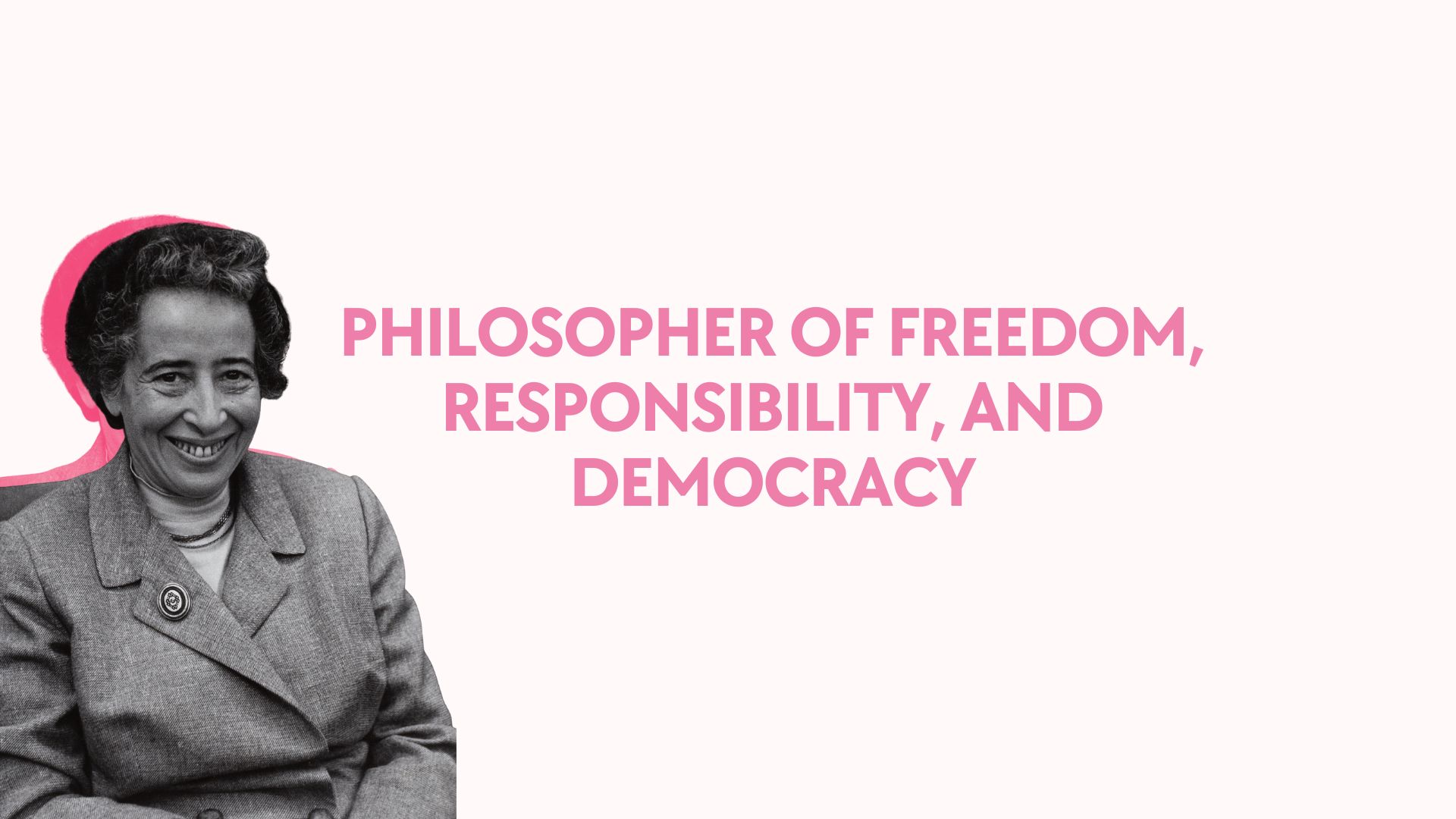
Philosopher of freedom, responsibility and democracy
Hannah Arendt was a German–American political philosopher whose experience of exile shaped her groundbreaking ideas on totalitarianism, freedom, and civic responsibility. Through works like The Human Condition, she showed that democracy depends on
critical thinking, public debate, and the courage to act — ideas that continue to influence how we understand justice and political life today.
Revolutionary Ideas for a Democratic Century and to Think
Arendt’s writings transformed political philosophy. In The Origins of Totalitarianism, she analysed how fear, propaganda, and the erosion of truth enable systems of oppression. In The Human Condition, she argued that politics must be understood as a space of action, plurality, and human connection. Her report on the Eichmann trial introduced the concept of the “banality of evil” — the idea that injustice can grow not only from hatred, but from obedience, conformity, and the refusal to think critically.
Courage to Question and to Think
Arendt was known for her intellectual independence and her refusal to follow any ideological line. She defended the value of public debate and believed that democracy depends on citizens who think critically and speak openly. Her life, marked by exile, academic achievements, and public controversy, demonstrates how courage in thought can change political culture.
Important Dates
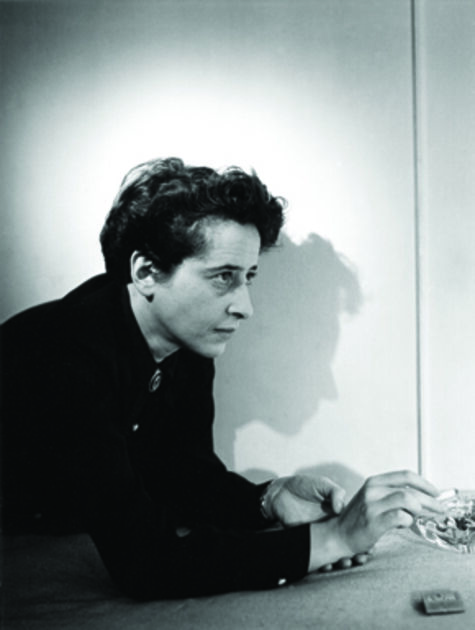
1906 – Born in Hanover, Germany
1933 – Arrested by the Gestapo; flees to Paris
1941 – Escapes to the United States
1951 – Publishes The Origins of Totalitarianism
1958 – Publishes The Human Condition
1963 – Reports on the Eichmann trial; coins “the banality of evil”
1975 – Dies in New York, leaving a major philosophical legacy
Why Hannah Arendt Is Relevant for the WE Frame Project
Hannah Arendt’s work remains central for understanding equality, democracy, and civic responsibility in Europe today. Her analysis of totalitarianism highlights how easily rights can be eroded when truth collapses and citizens withdraw from public life – a lesson essential to WE Frame’s focus on democratic participation and critical awareness.
Her idea that freedom grows through public action and dialogue aligns strongly with WE Frame’s goal of engaging young people in conversations about equality, care, and justice. She showed that political change depends not only on institutions but on human plurality – the ability to act together while respecting differences.
Arendt also experienced the intersection of gender, migration, and statelessness, offering a powerful example of how identity and structural barriers shape one’s political possibilities. Finally, her insistence on thinking for oneself – even when it is uncomfortable – resonates with WE Frame’s mission to challenge dominant narratives and foster open, intergenerational reflection.