
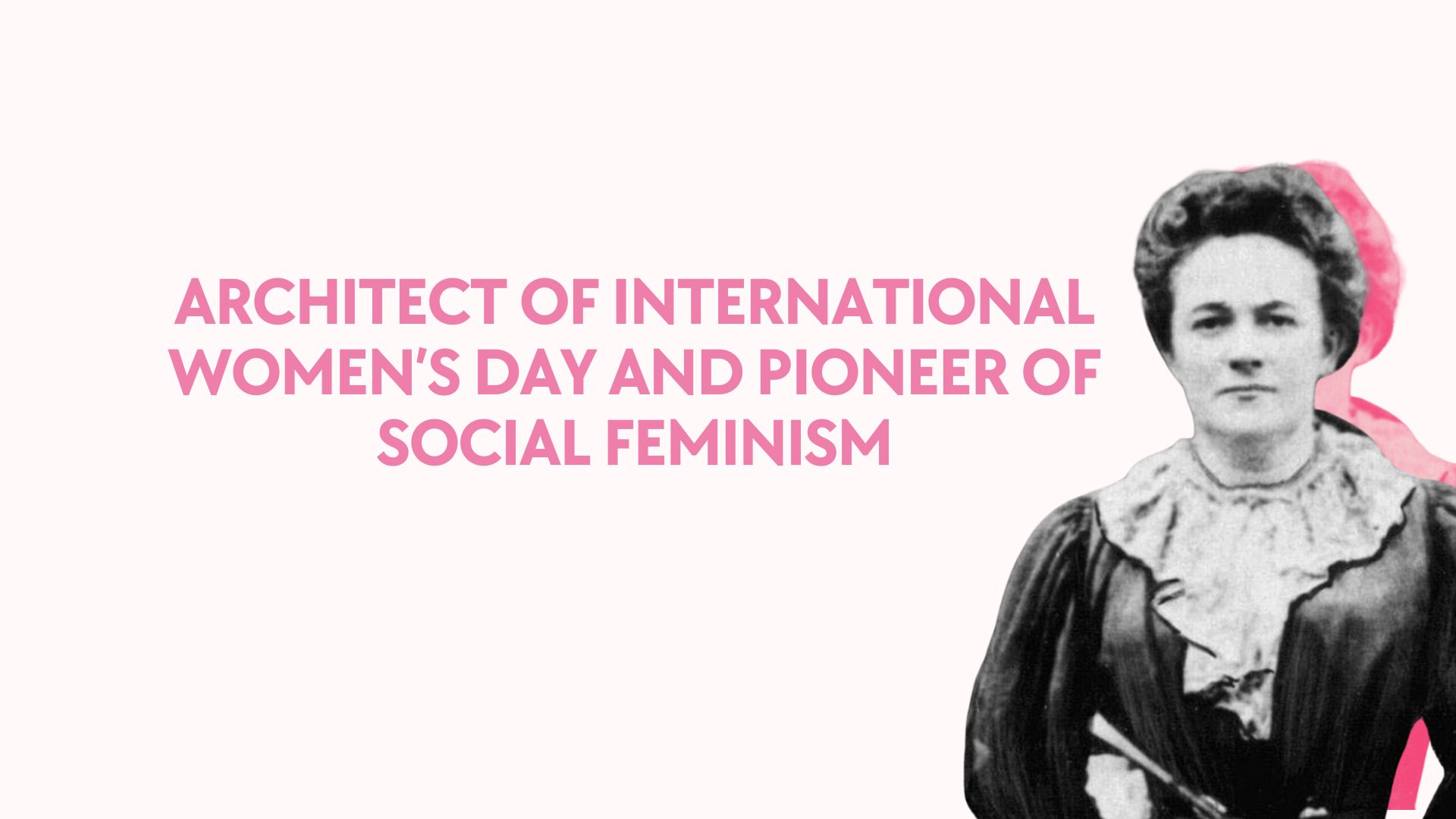
Women Who Shaped Europe | Clara Zetkin
Did you know that Clara Zetkin initiated International Women’s Day in 1910, turning women’s rights into a global movement? She fought for equality, labour rights, and peace across Europe.
Clara Zetkin was one of Europe’s most influential feminist thinkers and political organisers. Born in 1857 in Saxony, she grew up in a modest family and became politically active as a young teacher. From early on, she recognised that gender inequality could not be separated from economic hardship, class structures, and political exclusion.
This perspective shaped her lifelong commitment to linking feminism with broader struggles for workers’ rights and democratic participation. Forced into exile during the Anti-Socialist Laws, Zetkin lived in Switzerland and France, where she developed strong networks with European activists. Her writings and speeches positioned her as a leading figure of the socialist women’s movement. where she developed strong inequality could not be separated from economic hardship, class structures, and political exclusion.
Courage in Times of Political Danger
Throughout her life, Zetkin opposed militarism, authoritarianism, and the rise of fascism in Europe. At the age of 75, she opened the Reichstag session in 1932 with a powerful speech warning against Nazism. Her political courage made her a target, and she spent her final years in exile, where she died in 1933. Her legacy remains a symbol of resistance, democratic responsibility, and unwavering commitment to justice.
Important Dates
1857 – Born in Saxony, Germany
1880s – Forced into exile by Anti-Socialist Laws
1890s – Becomes a leading figure in the international socialist women’s movement
1910 – Proposes International Women’s Day at the Copenhagen congress
1911 – First International Women’s Day celebrated
1914–1918 – Active in the anti-war movement during WWI
1932 – Delivers a historic anti-fascist speech in the Reichstag
1933 – Dies in exile in the Soviet Union
A Dramatist Who Turned Politics Into Public Debate
In 1791, she rewrote the famous Declaration of the Rights of Man to include women – article by article.
It was not simply a critique; it was a proposal for a new social contract, where:
- women could vote,
- inherit property,
- divorce,
- and hold public office.
She showed that equality is not a gift but a responsibility of democracy.
Silenced for Speaking Too Loudly
Her determination to defend human rights — including her public plea against executions during the Terror — was interpreted as treason. She was executed in 1793 for her political activism.
Her death symbolised the danger faced by women who dared to enter political life.