
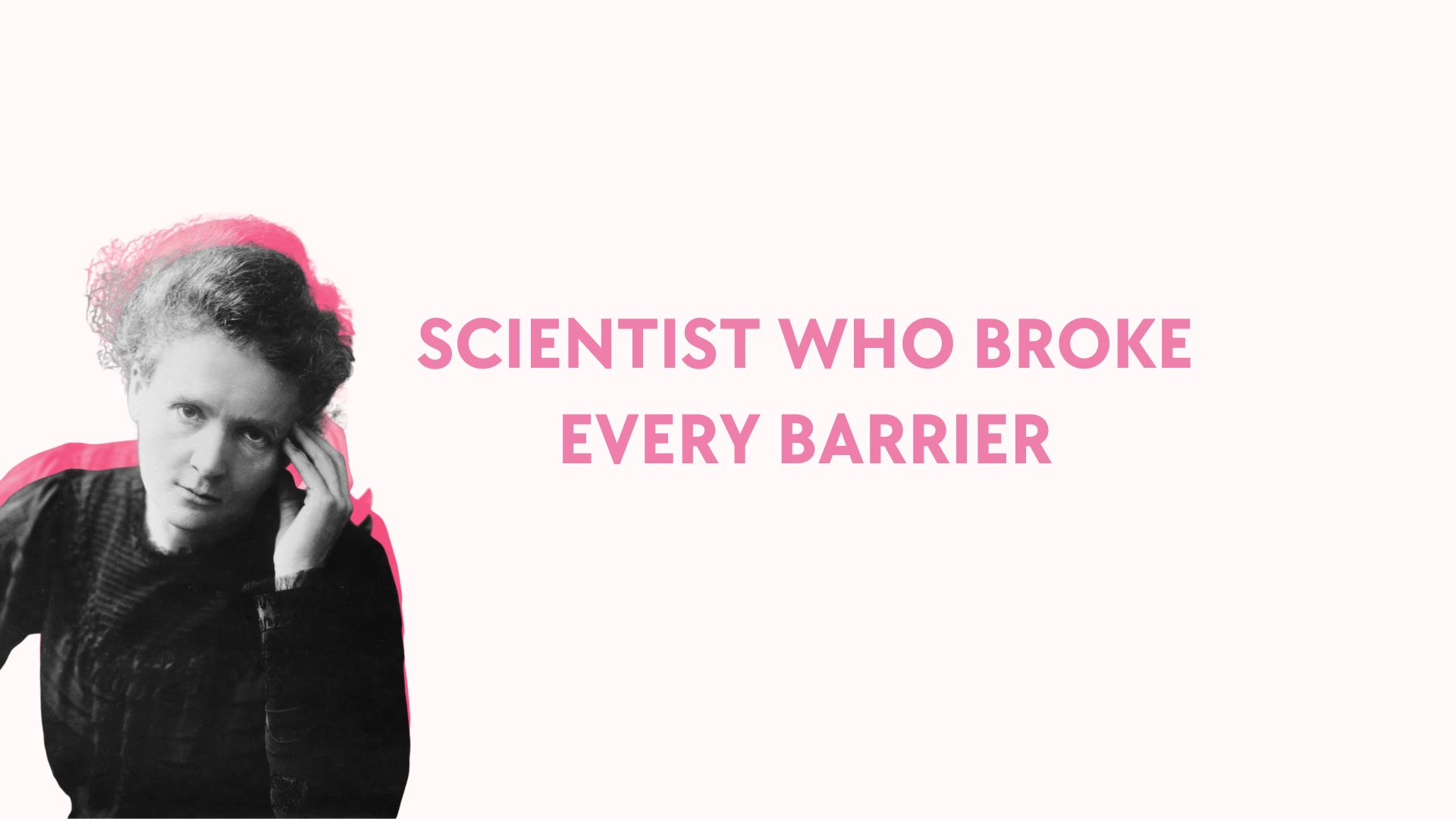
Women Who Shaped Europe | Marie Curie
Marie Curie was a groundbreaking physicist and chemist who discovered polonium and radium and coined the term “radioactivity.” As the first woman to win a Nobel Prize — and the only person to win in two scientific fields — she transformed physics, chemistry, and medicine. Her work continues to inspire generations of women in STEM.
Revolutionary Discoveries
Curie transformed science by coining the term radioactivity and discovering polonium and radium. Her research reshaped physics, chemistry, and medicine. She became the first woman to win a Nobel Prize and remains the only person to win Nobel Prizes in two different sciences.
Science in Service of Humanity
During WWI, Curie created mobile X-ray units-“Little Curies”-to diagnose wounded soldiers on the front lines. She trained over 150 women to use them, showing how science can directly save lives.
Important Dates
1867 – Borni n Warsaw, Poland
1891 – Moves to Paris to study at the Sorbonne
1898 – Discovers polonium and radium
1903 – Wins her first Nobel Prize
1906 – Becomes the first female professor at the Sorbonne
1911 – Wins her second Nobel Prize
1914 – Establishes the Radium Institute in Paris
1914-1918 – Creates mobile X-ray units (“Little Curies”) during WW
1921 – Travels to the U.S.to raise funds for radium research
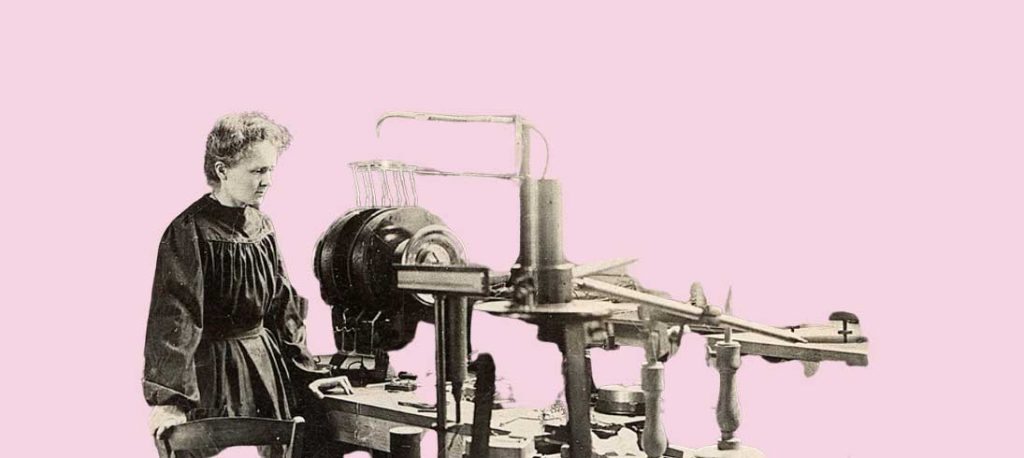
Why Marie Curie Is Relevant for the WE Frame Project
- She embodies the struggle for gender equality in education and science.
- Curie broke through strict gender barriers that excluded women from universities and research institutions, making her a symbol of equal access to knowledge – a core WE Frame priority.
- Her life illustrates how structural discrimination can be challenged and transformed.
- She faced institutional rejection, financial hardship, and systematic sexism, yet built a scientific legacy that reshaped Europe. Her story highlights the importance of addressing the hidden barriers women still encounter today.
- She represents intergenerational inspiration.
- Curie’s achievements continue to inspire young women in STEM across Europe and beyond. Her life demonstrates how the experiences of one generation can open possibilities for the next – directly supporting WE Frame’s aim to create dialogue between young people and older generations.
- Her scientific contributions benefited society as a whole.
- By developing radiation therapy and mobile X-ray units, she turned scientific knowledge into public good. This matches WE Frame’s vision of connecting equality with wellbeing, care, and social responsibility.
- She shows the power of intersectional resilience.
- As a woman, a migrant, and a scientist working in male-dominated institutions, Curie navigated multiple layers of discrimination. Her story helps illustrate intersectionality in European history and modern equality debates.
- She is a European figure shaped by cross-border learning and collaboration.
- Curie’s Polish origin and French scientific career highlight Europe’s tradition of mobility, cooperation, and shared knowledge, aligning with WE Frame’s focus on European values and integration.