
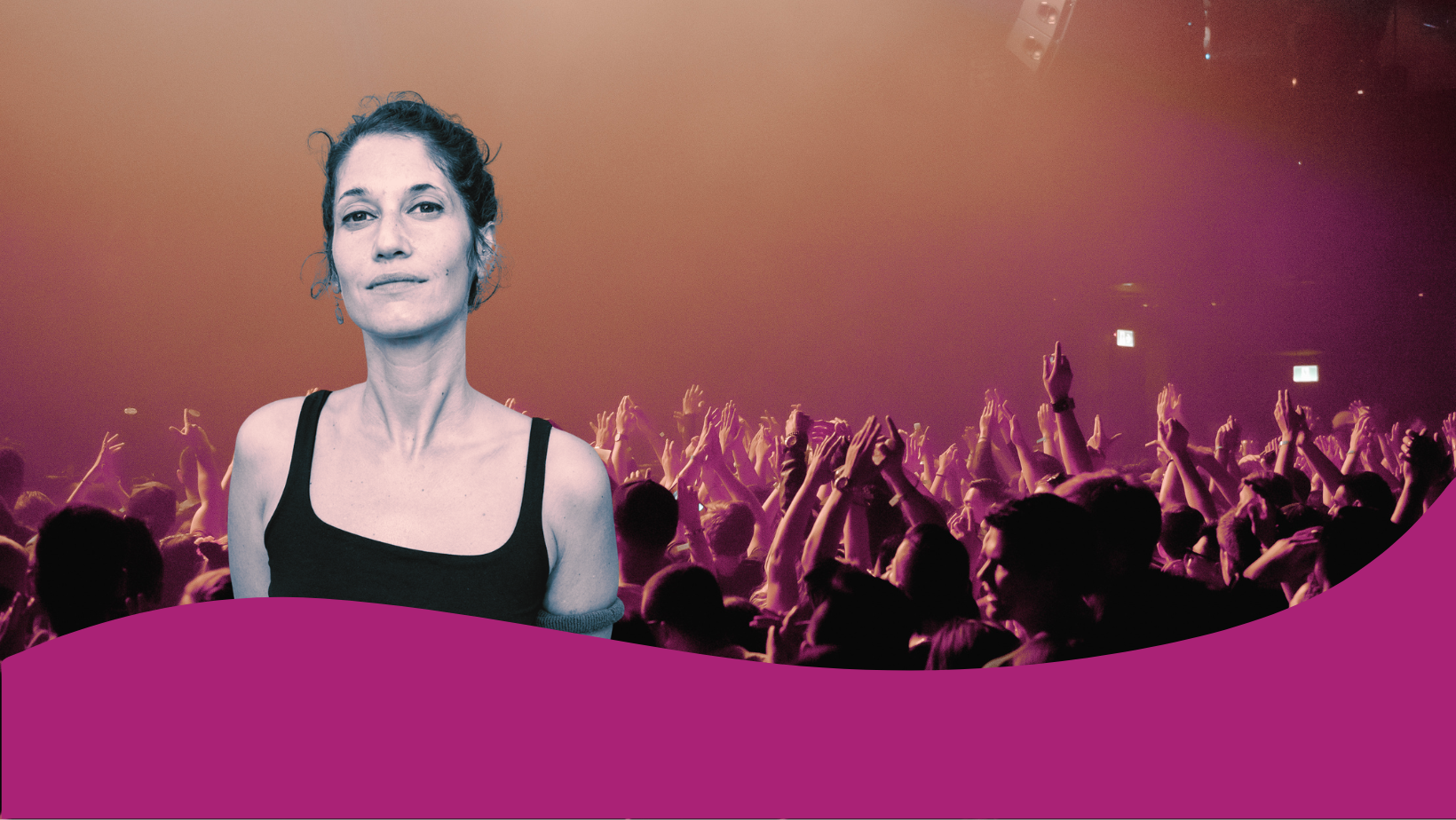
Let’s talk about women and photography with Roberta Paolucci
I’m Roberta Paolucci. I live in Massa Martana, a small village in Umbria, Italy. I’m a freelance photographer and a visual communication designer.
My pronouns are she/her.
What is one of your first memory about feminism?
I think I was about ten years old when I was sitting on a chair, fighting against my grandparents because there weren’t enough women in the Italian parliament.
I was only 10, but I remember him looking at me as if I were a little crazy girl. Maybe he was also thinking that I would cause him a lot of problems.
What is your work and how it could be related to gender issue?
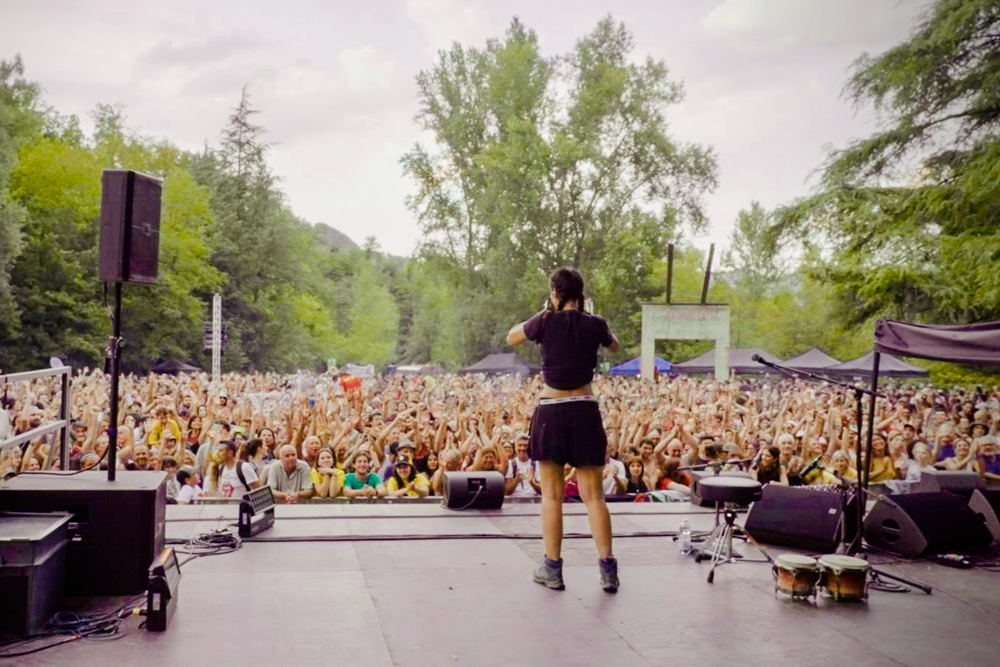
I’m a photographer, especially at events. I’m a music photographer at concerts, a wedding photographer, and I also work at different kinds of events like medical events or promotional initiative events.
I remember that when I started, almost 25 years ago, I was one of the only women working as a photographer. Now the situation is changing a little, but not so much. For example, music is still a male-dominated world. We can see that the technicians, sound, lighting, tour managers, the majority are men, and photographers and videographers are men too. So it’s a little difficult to be heard, if I can say that, in this world. And sometimes I don’t feel safe. Like when I go into a backstage and I’m surrounded by men. Nothing happened, really nothing happened, but you can hear some jokes, or you can notice a different way of looking at you and speaking to you.
When I’m under the stage, I’m not sure if it’s the correct word, when I work in the pit, I now see more young girls starting to work in music. So usually I go up to them and say: “Okay, we can work together. We don’t need to fight to have a spotlight here.” And I love that.
I work with my husband. He is a videographer, and sometimes this happens: the audience, the fans, touch me or speak to me in a certain way, or sometimes I find a photo of me in my DMs on Instagram, and I don’t understand why this happens only to me. It doesn’t happen to my husband. Nobody looks at him or takes a photo of him while he’s working, and I don’t like this. I think it’s because it’s still unusual to see a woman working there.
Once something strange happened. I was working as a second videographer, and when he reviewed all the material I had recorded, he was shocked, because I was working at an electronic music festival and he could see how people had interacted with me, sometimes in a really bad way. So he finally understood my point of view.
There’s another thing I’d like to draw attention to: the way women and men are portrayed in photography. When we photograph a male artist, what matters is always the energy. It doesn’t matter if he’s not conventionally attractive or has an unusual face, it’s the energy that counts. When we photograph women artists, not all photographers do this, but many, even women photographers, are very careful to represent them as nice-looking, sexy. Sometimes we delete photos in which these women artists don’t look beautiful or polished, even if the feeling or expression on their face is stronger, more interesting, more energetic. We are so careful not to choose photos where they don’t look pretty or sexy. For men, it’s different. You can choose any photo you want.
And I don’t like this, especially when male photographers always choose photos in which the woman artist looks sexy. That’s a poor way to express the music, the energy, and the power of women. So I choose to shoot the imperfections, but also the real soul of the artist.
What you’re saying is very interesting, that there is a difference both in terms of who takes the photos and who gets photographed.
I can give you another example from a different world, like the wedding world, if you like. So I try not to take different photos based on whether there is a male or a female artist. But this difference can be found also in wedding portraits, in wedding reportage. I work a lot in this field, and I see a lot of photos in which the bride is so romantic, so delicate, and sometimes seems to need the protection of the groom. This is the romantic way to approach a wedding photoshoot.
I don’t agree with this. I think that every couple is different. Maybe in one couple the bride is stronger than the man, or has a different personality, is much more funny or more outgoing or more delicate. It depends on the couple. But usually, if you look at different wedding photoshoots, you can see this romantic way of telling the story of the couple, especially when it comes to the women.
Sometimes the woman is leaning on the shoulder of the man, in this very… in Italian I would say “ho bisogno di protezione”, I need protection. And this usually happens with male photographers, because women approach it differently, but it also depends on the couple. Maybe they want that idea of the couple. So you can see differences between how women and men are portrayed in different worlds: music, weddings, events. And it affects how we perceive the image of a woman and of a man. And if I’m going to get married again someday, I will choose a woman photographer.
I know you have a project related to happiness, would you like to tell me about it?
I work with my husband and we have a graphic design and communication studio, but we also have a personal project. The name is Spago. Spago in Italian means “string” or “twine”, because we want to connect all the people we meet around the world through our travels.
Spago is a project about the talent to be happy, and it’s made up of many short interviews with people we meet around the world, randomly. We travel one or two months at a time, especially around Latin America, which we love, and we record these interviews with people who are happy and talented.
Usually talent is associated with artistic skills like music, theater or painting. To me, talent is the opportunity and the choice to help yourself or other people, to change the world, not necessarily with a big plan, but you can also change the life of one person and make a difference. So we interview many different people and associations.
We interviewed a feminist and independent journalist in Mexico. We interviewed a guy in Vietnam who decided to run the entire country from north to south, and when he finished he decided to customize motorcycles, with no previous knowledge of how to build one.
We interviewed an association that works with young girls in Bolivia who are going through very difficult circumstances.
We interviewed indigenous people from Michoacán who decided to use a plant that was contaminating a local lake to make paper with a traditional Chinese method, and then used that paper to organize an exhibition about human rights and environmental rights.
We interviewed a music photographer in Mexico. We interviewed so many people, so many different talents. And this project is about inspiration. All these people inspire us. We want to show a different way of living and of thinking about talent. And the whole project is free online. You can find all the stories we recorded and share them, or if you want you can connect directly with the people we interviewed.
What is in your opinion the challenge for feminism today?
I think there are a lot of things to change in this world, and a lot of fights still ahead for feminism. One of the first for me is about work, because we need to change our situation in the working world.
I believe we should work a lot on the area of work: on equal pay, on equal rights, on job security. For example, I’m convinced that if there were more managerial positions available and less competition among us for the few spotlights that exist, there would be a very different kind of collaboration between women. It would also change the whole narrative of “you’re women, you fight each other because you’re women.” We fight each other because we have to carve out that little space for ourselves. So it would change the entire environment.
I’m convinced that economic freedom, economic security, the security of not losing your job because you become a mother, can bring women to a place where they can truly recognize their own rights. And I also think that without independence, a person cannot break the chains that hold them back. This is, to me, one of the root issues, one that we often put behind all the other battles. It’s not simple to describe the role that economic independence plays in our lives as women.
And what will be the challenge maybe in 10 years, in the future?
Let’s talk about communication. This is one of the challenges I think we need to face. First of all, we need to understand the right way to communicate our movement.
Because when I start to talk about feminism, people look at me like I’m an enemy, like I want to steal their rights, or like I’m being too heavy-handed. They don’t understand, women and men alike, that we are fighting for the rights of everybody, including men. So I think we need to find the right way to communicate that.
And we also need to work on the new generation, starting from communication, because we are shaped by so many layers: family, society, our personal experiences. But if we start from the beginning, maybe we can change something. I am working in a school with boys and girls of 12 years old. We are working on the perception of their own image, on portraits and self-portraits, on how to choose the right photo to share online, on how to respect other people when we take photos, on how to photograph a man or a woman.
So I think it’s really, really important to start with the new generation, and we need to start now.
We need to start with communication, we need to be careful about the words we use, about the way we represent women and men, about the photos that this young generation has on their phones 24 hours a day. On Instagram, on TikTok, the way women and men are portrayed is completely different.
And it’s really, really important to explain to boys and girls that a woman is not only pretty, beautiful, or sexy. A woman is also strong. A woman can be without makeup and that’s not a problem. A woman can have white hair and that’s perfectly fine. Women and men have the same right to be themselves. I think that is what matters.
Three examples of women who inspire you?
First of all, it’s a group of women, not just one: the partisan women who fought against Nazi-fascism. Because they showed us that not only men can fight for rights, and they won us many of the rights we have today. So these women are an example to follow.
The second one is Franca Viola. Franca Viola was the first woman in Italy to say no to a forced marriage. We’re talking about the 1960s. She had been raped by her ex-fiancé, and for the first time she refused to marry him. Because in Italy at the time, if you were raped and you agreed to marry your rapist, the rapist was exempt from prosecution. Given the era and the society of those days, I think she was really, really brave, and I deeply admire her.
And the third is my mentor in communication: Michela Murgia. Because I really love and appreciate the way she used words and engaged in conflict. She could confront anyone, man or woman, with logic, with rationality, but also with the right tone. So I think we have a lot to learn from her about how to use words, choose words, and fight with words.